
They Say You Should Never Meet Your Heroes
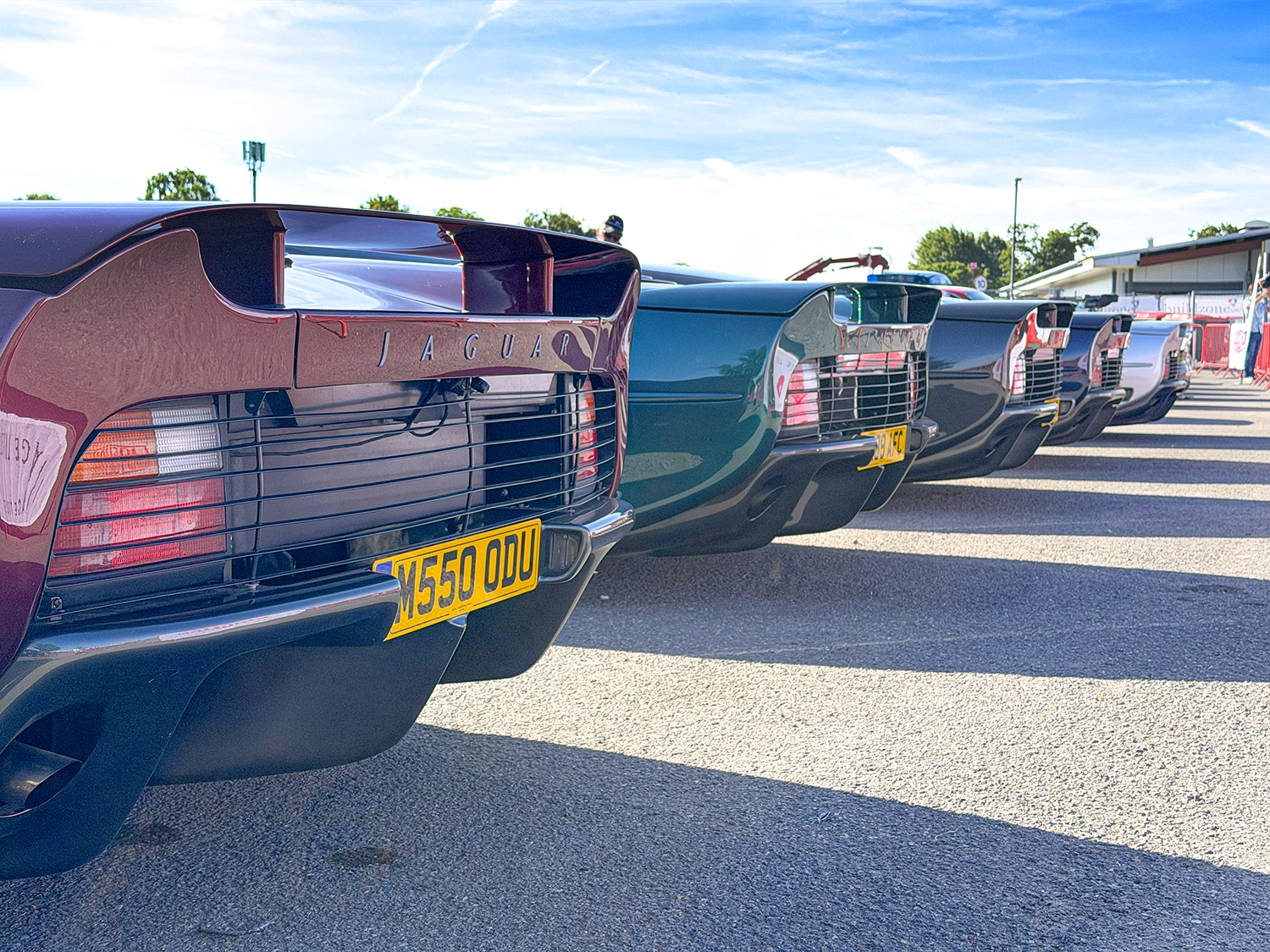
That advice probably makes more sense when your hero can talk back. Mine was a Jaguar XJ220, and at the first Jaguars at Oulton – Cheshire Cats, there were five of them.
No, I don’t mean the Stig.
Ben Collins was there too, and his interview was genuinely very good: relaxed, entertaining and full of insight. It was particularly fitting that he should be part of the event because he has recently bought an XJ220 of his own.
The XJ220, though, was the car I had come to see.
Five Jaguar XJ220s in One Place
Seeing one Jaguar XJ220 is special. Seeing five together, representing every colour in which the car was originally produced, is the sort of sight that makes you stop, walk back and look again.
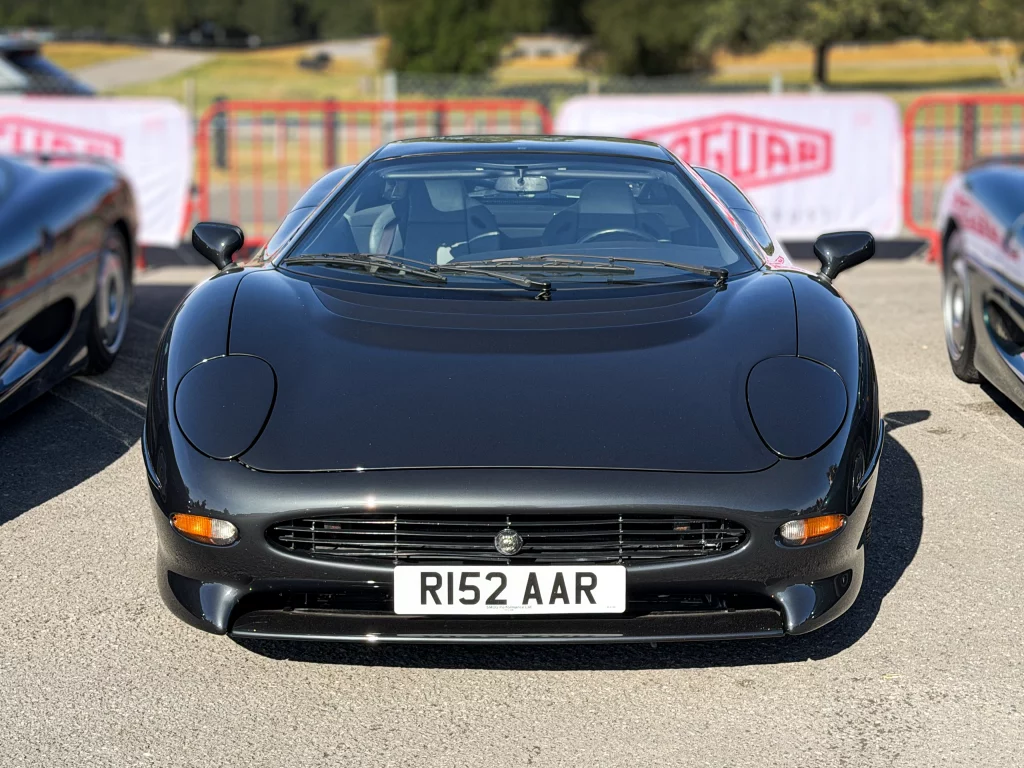
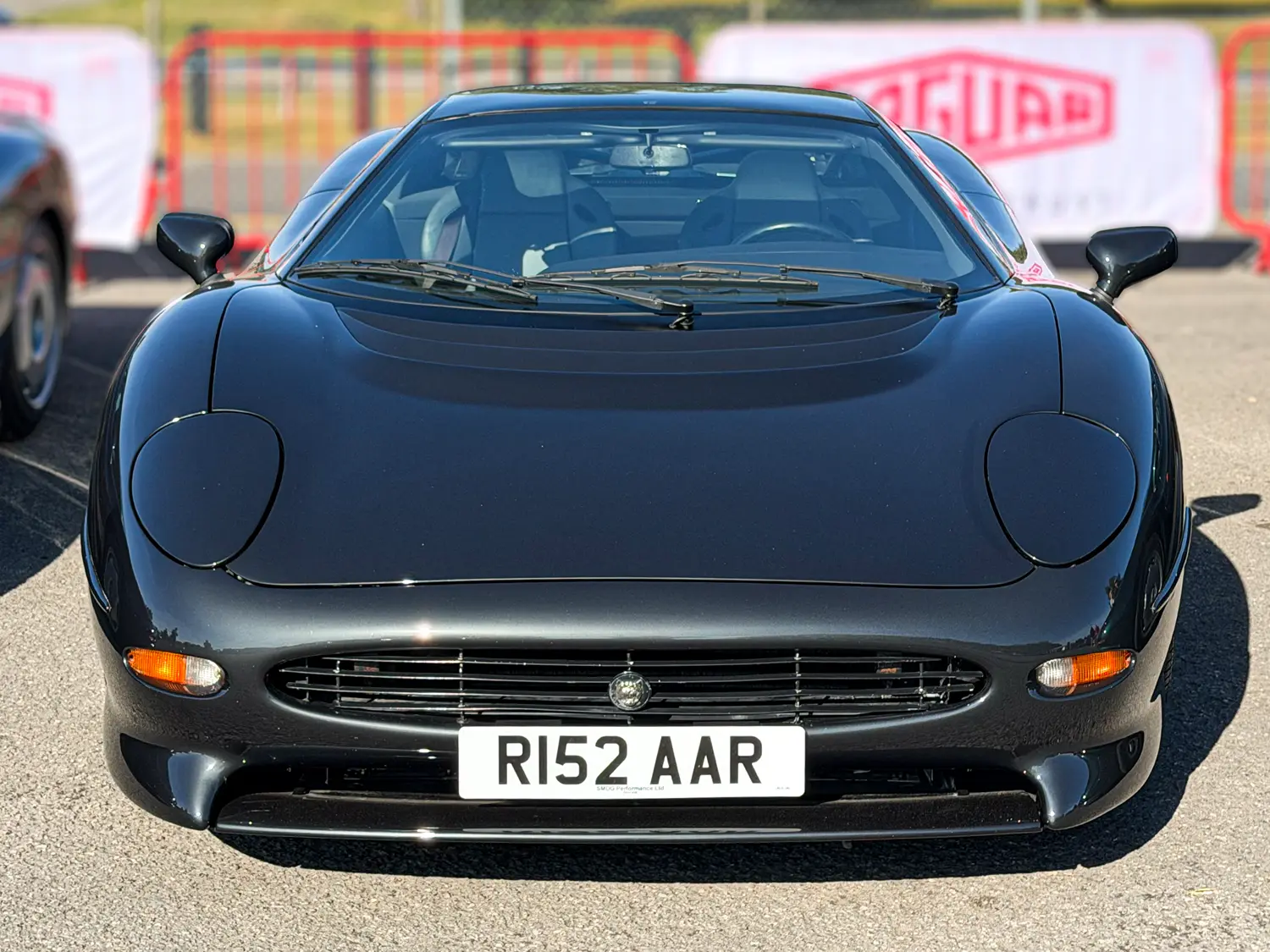
Even more than three decades after it was built, it still looks extraordinary. It is incredibly low, impossibly wide and more like a concept car than something Jaguar actually allowed people to buy and drive on the road.
Seeing the name again also took me straight back to playing Jaguar XJ220 on the Amiga 500. Before we could instantly watch almost any car from every possible angle online, games like that helped turn already exotic machines into something almost mythical.
The real thing did not disappoint.
Jaguar History Brought to Life
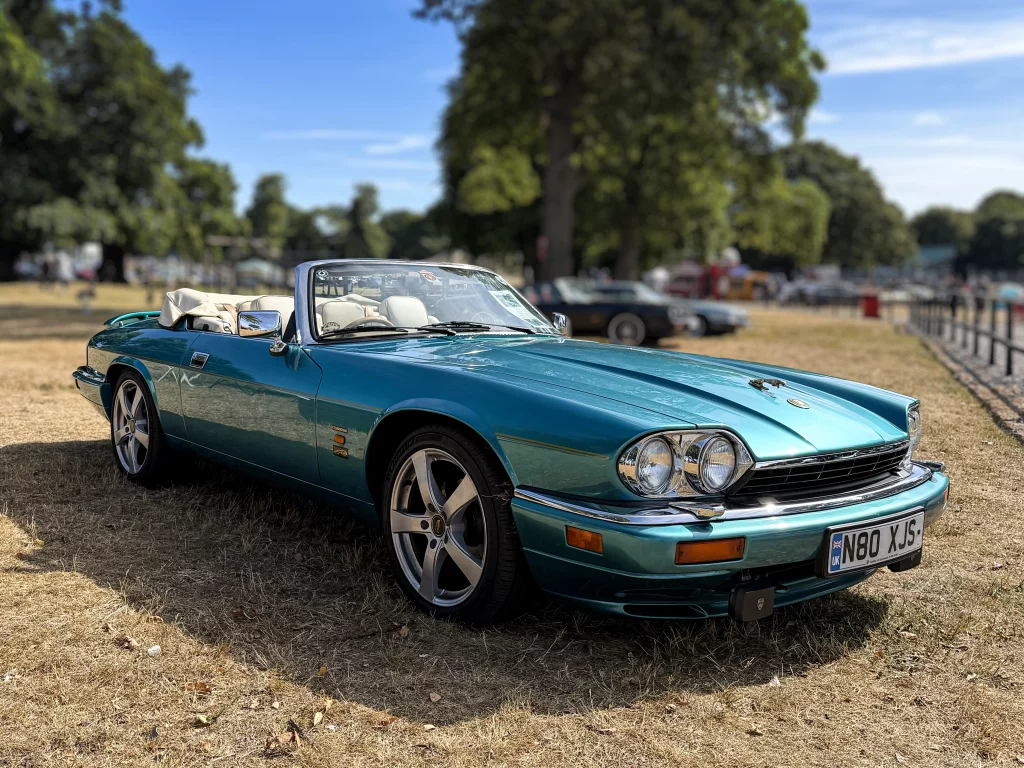
The XJ220s may have been the personal highlight, but they were surrounded by some remarkable company.
The Jaguar Daimler Heritage Trust brought a selection of significant road and racing cars, turning part of Oulton Park into a rolling museum of Jaguar history.
The on-track demonstration included the 1988 Le Mans-winning Jaguar XJR-9, the extremely rare XJR-15 and the beautiful one-off XJ13. There were also Group 44 competition cars, the formidable Lister XJ-S Le Mans and, of course, the five XJ220s.
These cars are impressive when standing still, but hearing them start and seeing them move adds an entirely different dimension. It brings the engineering, noise and history back to life in a way that a static museum display cannot quite replicate.
The Classic Sports Car Club race programme kept the circuit busy throughout the day, while displays celebrated generations of Jaguar and Daimler cars. These ranged from much-loved road models to machines built specifically to compete at the highest levels of motorsport.
Jaguar History Brought to Life
The XJ220s may have been the personal highlight, but they were surrounded by some remarkable company.
The Jaguar Daimler Heritage Trust brought a selection of significant road and racing cars, turning part of Oulton Park into a rolling museum of Jaguar history.
The on-track demonstration included the 1988 Le Mans-winning Jaguar XJR-9, the extremely rare XJR-15 and the beautiful one-off XJ13. There were also Group 44 competition cars, the formidable Lister XJ-S Le Mans and, of course, the five XJ220s.
These cars are impressive when standing still, but hearing them start and seeing them move adds an entirely different dimension. It brings the engineering, noise and history back to life in a way that a static museum display cannot quite replicate.
The Classic Sports Car Club race programme kept the circuit busy throughout the day, while displays celebrated generations of Jaguar and Daimler cars. These ranged from much-loved road models to machines built specifically to compete at the highest levels of motorsport.
More Than Just the Cars
A good motoring event is never only about the headline cars.
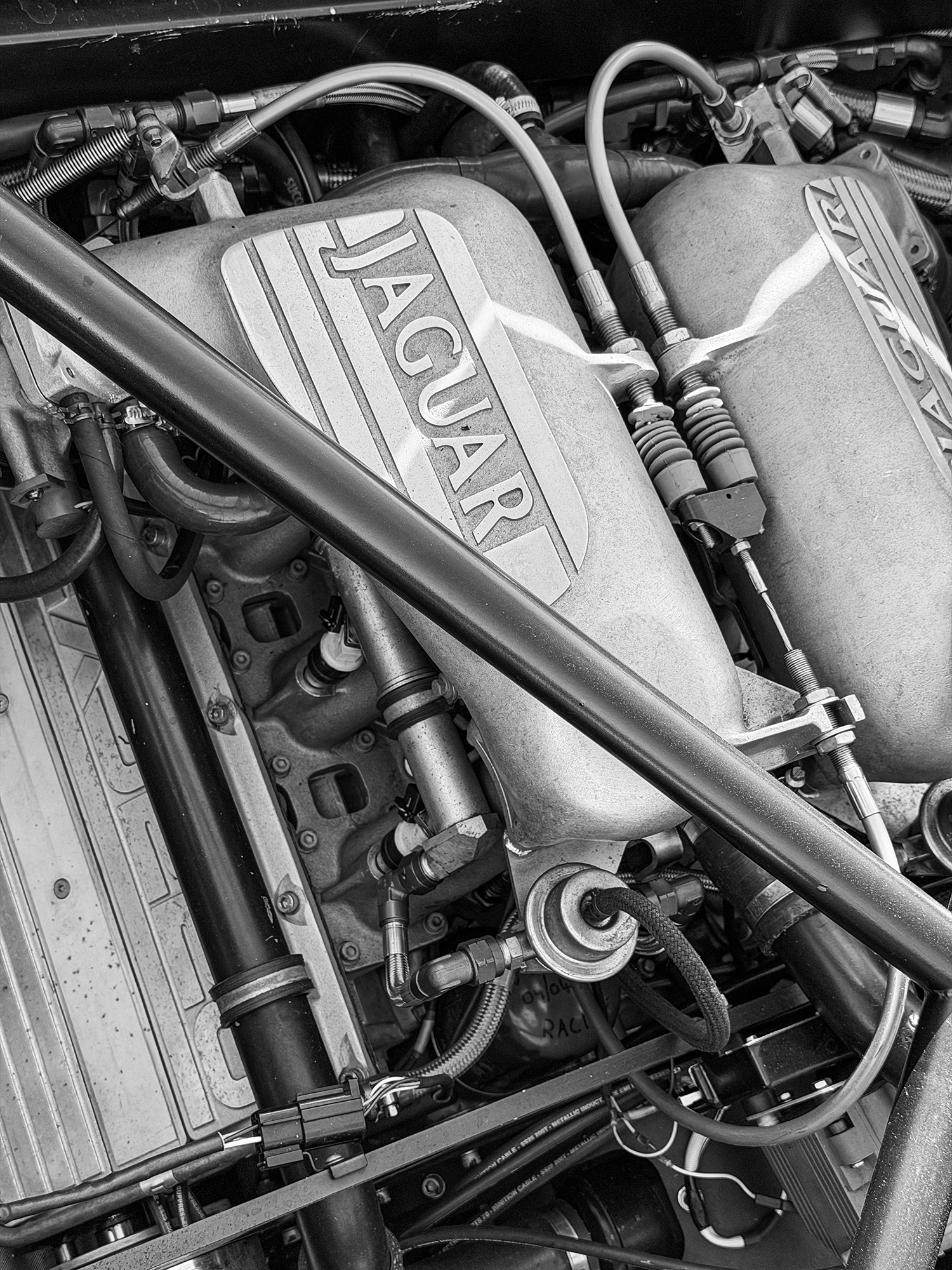
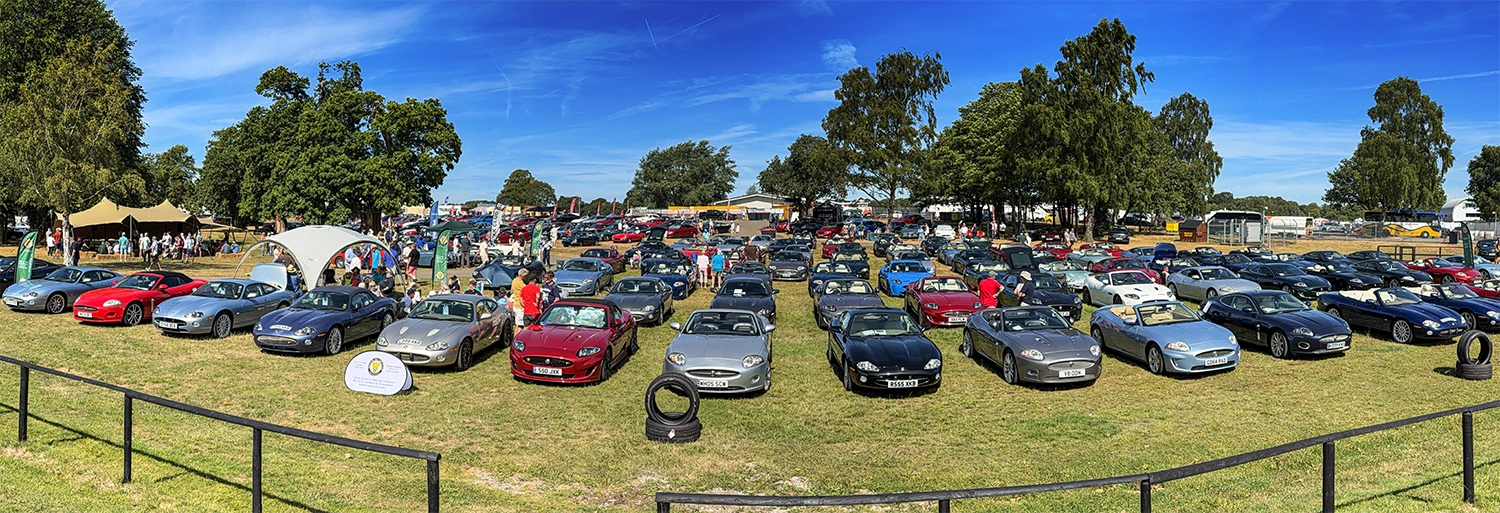
The club displays brought together owners and enthusiasts from across the country, each with their own knowledge, experiences and stories. Wherever you looked, people were inspecting details, comparing cars or sharing memories of models they had once owned – or still wished they did.
That atmosphere is one of the reasons I enjoy photographing car events. The rare machinery may initially attract the attention, but the people and smaller moments are what tell the complete story.
Why I Love Photographing Car Events
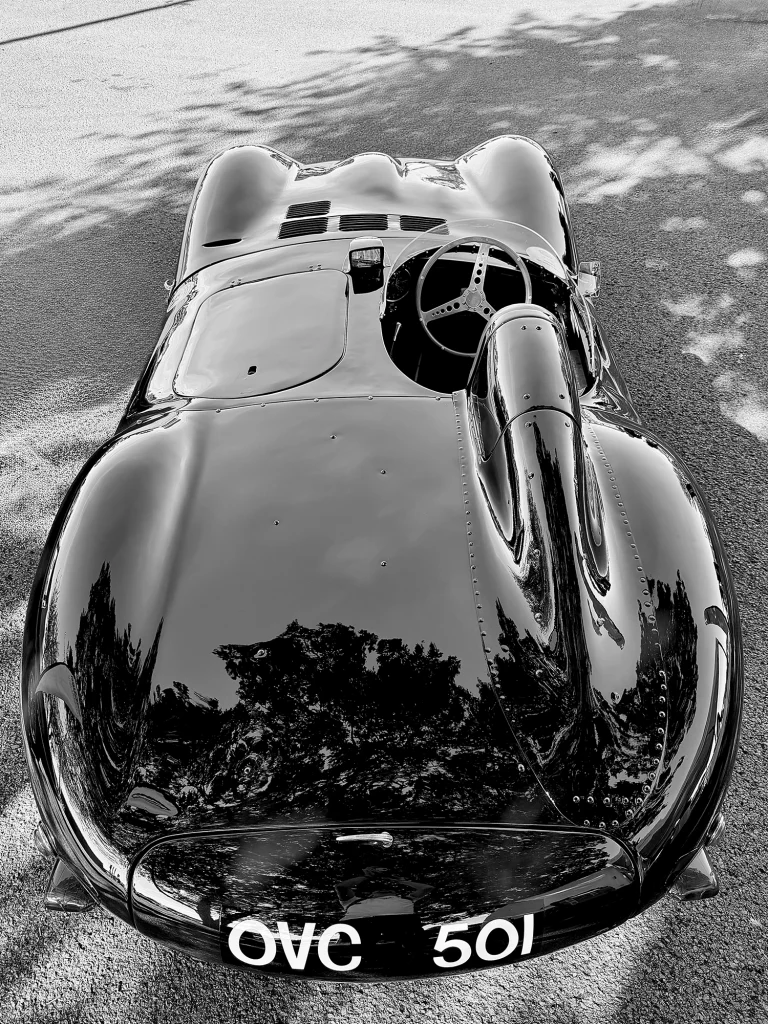
Cars make wonderful photographic subjects. There are body lines, reflections, badges, mechanical details and interiors to capture before they even turn a wheel. Once they are moving, there is the additional challenge of conveying speed, noise and energy in a still image.
However, effective event photography should record more than which cars attended.
My aim is to capture what it actually felt like to be there: the anticipation before a demonstration, the concentration in the paddock, the crowds gathering around something special and the small details an ordinary event photograph might miss.
My own enthusiasm for cars means I understand why a particular model, angle or moment matters. It allows me to approach a motoring event as both a photographer and an enthusiast.
Event Photography from Experience Photography
Experience Photography provides professional event photography for car shows, owners’ club meetings, track events, vehicle launches and other automotive occasions.
Coverage can include static vehicle displays, on-track action, owners and guests, presentations, interviews and the wider atmosphere of the day. The result is a varied collection of images suitable for websites, social media, press coverage and future event promotion.
If you are organising a motoring event in Cheshire, Wirral, Liverpool, Manchester or elsewhere in the North West, I would love to discuss how I can help capture it.
The cars deserve photographs created with the same attention to detail that went into designing, building and preserving them.
What was Jaguars at Oulton Park FAQs
Yes, Ben Collins appeared as a special guest at Jaguars at Oulton Park, Cheshire Cats. He took part in an interview and joined the special on track demonstration of historic Jaguar cars.
Ben Collins is best known to many people as the former Stig from Top Gear, but his career extends well beyond the television programme. He has competed professionally in several forms of motorsport and has worked as a precision driver on major film productions.
At Oulton Park, Collins drove the Jaguar XJR-5 Group 44 racing car as part of the Big Cats demonstration. The V12 racing car competed in America during the 1980s and won the Road Atlanta 500 km race in 1985.
His interview was one of the highlights away from the circuit. It was relaxed, entertaining and provided an interesting perspective from someone with extensive experience of racing, testing and driving high performance cars.
There was also an appropriate connection between Ben Collins and one of the event’s main attractions. Collins has bought a Jaguar XJ220 of his own and has documented his experience with the car. With five Jaguar XJ220s displayed together at Oulton Park, his appearance felt particularly relevant.
However, when talking about meeting your heroes at Jaguars at Oulton Park, I was not referring to the Stig. My hero was the Jaguar XJ220 itself.
The combination of a recognisable guest, an entertaining interview and rare cars moving on the circuit added another layer to the event. It also created opportunities to photograph more than static vehicle displays, helping to capture the personalities, stories and live moments that made the day memorable.
Oulton Park’s official Cheshire Cats event listing includes details of Ben Collins’ appearance and the historic Jaguar demonstration.
The purple, white and yellow Silk Cut Jaguar seen at Oulton Park was the Jaguar XJR-9 LM. More importantly, it was the actual No. 2 car that won the 1988 24 Hours of Le Mans.
The Jaguar XJR-9 was developed by Tom Walkinshaw Racing for international sports car competition. Its 7.0 litre, naturally aspirated Jaguar V12 produced approximately 750 bhp, giving the car the power and endurance required for Group C racing.
At Le Mans in 1988, the winning XJR-9 was driven by Jan Lammers, Johnny Dumfries and Andy Wallace. It completed 394 laps and secured Jaguar’s first overall victory at Le Mans since 1957. The achievement was even more remarkable because the car was stuck in fourth gear during the final part of the race.
The Silk Cut livery became one of the most recognisable colour schemes in endurance racing. Its combination of purple, white and yellow remains closely associated with Jaguar’s successful return to the front of international sports car competition during the 1980s.
The car appearing at Jaguars at Oulton Park was not simply a replica wearing a famous racing livery. It was the historic Le Mans winning XJR-9 preserved by the Jaguar Daimler Heritage Trust.
Seeing the XJR-9 standing still provided an opportunity to appreciate its low bodywork, enclosed rear wheels, large aerodynamic surfaces and purposeful cockpit. Hearing its V12 engine and seeing it take part in the on track demonstration brought an entirely different dimension to the experience.
For event photography, a car like the Silk Cut Jaguar offers more than an attractive subject. Its colours, engineering and racing history allow a photograph to connect a modern event at Oulton Park with one of the most important victories in Jaguar’s motorsport history.
The Jaguar Daimler Heritage Trust has a detailed record of the 1988 Le Mans winning Jaguar XJR-9.
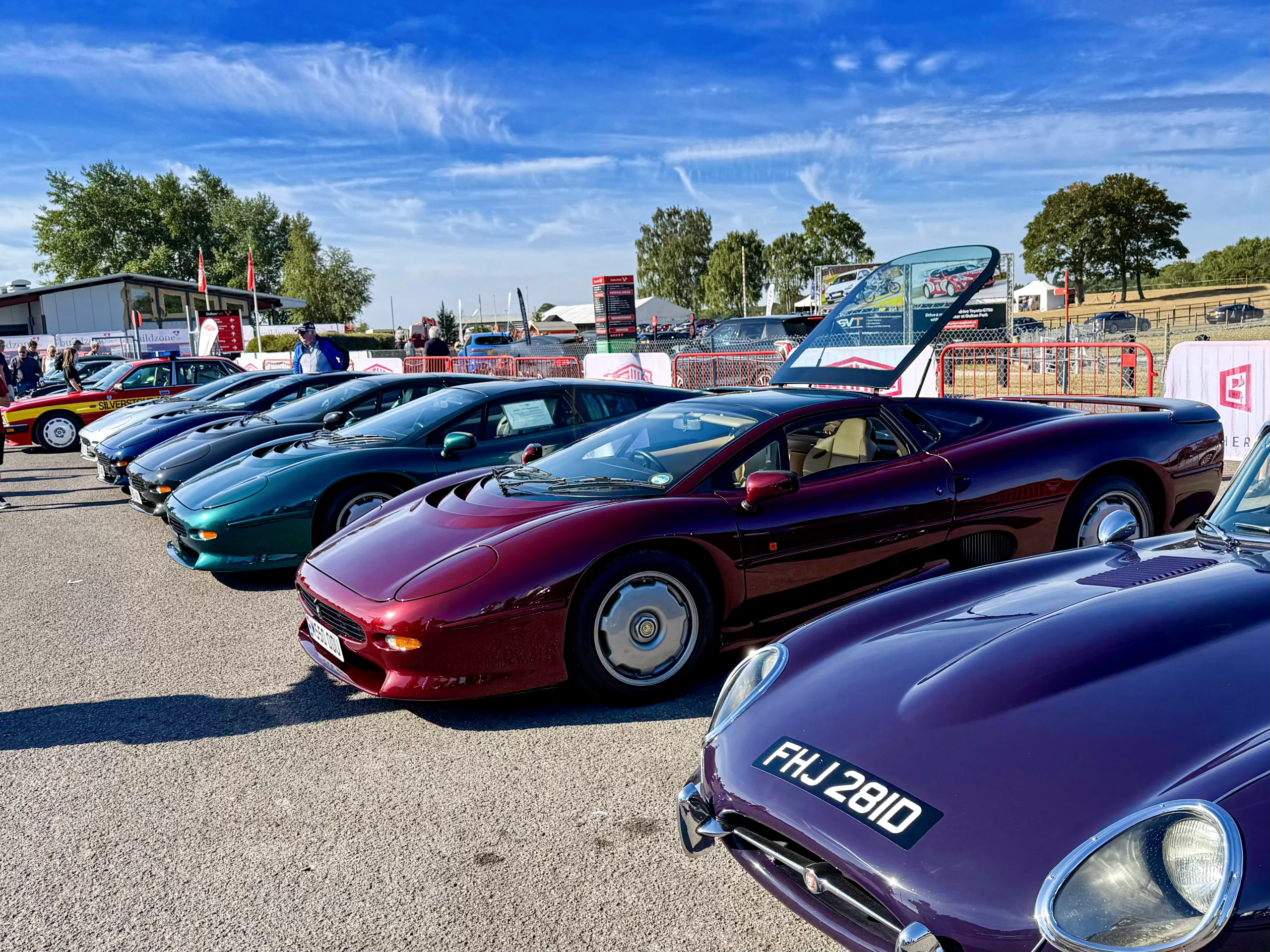
The Jaguar XJ220 is special because it remains one of the fastest, rarest and most visually dramatic road cars ever produced in Britain. At Jaguars at Oulton Park, visitors had the unusual opportunity to see five XJ220s together, with one example representing every colour in which the car was made.
Jaguar originally revealed the XJ220 concept at the 1988 British International Motor Show. The concept proposed a V12 engine and four wheel drive, but the production car used a lighter and more compact 3.5 litre twin turbocharged V6.
The production engine developed approximately 542 bhp. Jaguar recorded a top speed of 217 mph during testing at the Nardò circuit in Italy, making the XJ220 one of the fastest production cars in the world at the time.
Only 281 production examples were completed between 1992 and 1994. That limited production run means seeing one Jaguar XJ220 on the road or at a car show is unusual. Finding five together at Oulton Park was therefore one of the defining sights of the Cheshire Cats event.
Its shape is also a major part of its appeal. The XJ220 is exceptionally long, low and wide, with flowing bodywork that still looks futuristic more than three decades after production began.
For me, the Jaguar XJ220 also brings back memories of playing the game of the same name on the Commodore Amiga 500. Games and magazines helped make cars like the XJ220 feel almost mythical at a time when there was no immediate access to online video or social media.
Seeing five real Jaguar XJ220s at Oulton Park proved that meeting a motoring hero does not necessarily end in disappointment. The car’s proportions, rarity and presence are even more striking when experienced in person.
The Jaguar Daimler Heritage Trust’s history of the XJ220 provides more information about the development of the production car.
Jaguars at Oulton Park, Cheshire Cats was a new event dedicated to celebrating Jaguar and Daimler road and racing cars. The inaugural event took place at Oulton Park in Cheshire on 8 August 2026 and acted as the Jaguar Daimler Heritage Trust’s dedicated national day.
Unlike a conventional race meeting, Jaguars at Oulton Park combined competitive motorsport with historic displays, special guests, owners’ clubs and demonstrations featuring important cars from Jaguar’s past.
The off track displays included Jaguars from many different eras. The event also marked 25 years of the X-Type, 30 years of the XK8 and XKR, 40 years of the XJ40 and 65 years of the E-Type. It additionally celebrated 130 years of Daimler.
One of the main attractions was the Big Cats demonstration. This brought significant Jaguar racing cars onto the circuit, including the 1988 Le Mans winning Jaguar XJR-9, the rare XJR-15, the one-off XJ13 and several Group 44 competition cars. Five Jaguar XJ220s were also displayed together, with an example representing every colour in which the car was made.
The Classic Sports Car Club provided the competitive racing. Its programme included the Jaguar Championship, the Powered by Jaguar race and the Mike Hawthorn Jaguar Challenge for historic models built before 1961.
For a car enthusiast and event photographer, this combination made Jaguars at Oulton Park particularly interesting. There were iconic cars, live track action, engineering details, interviews and the reactions of visitors seeing genuinely rare vehicles.
The result was more than a display of old cars. It was a celebration of Jaguar’s road cars, racing history and continuing appeal, all brought together at one of Britain’s most distinctive racing circuits.

Leave A Comment