
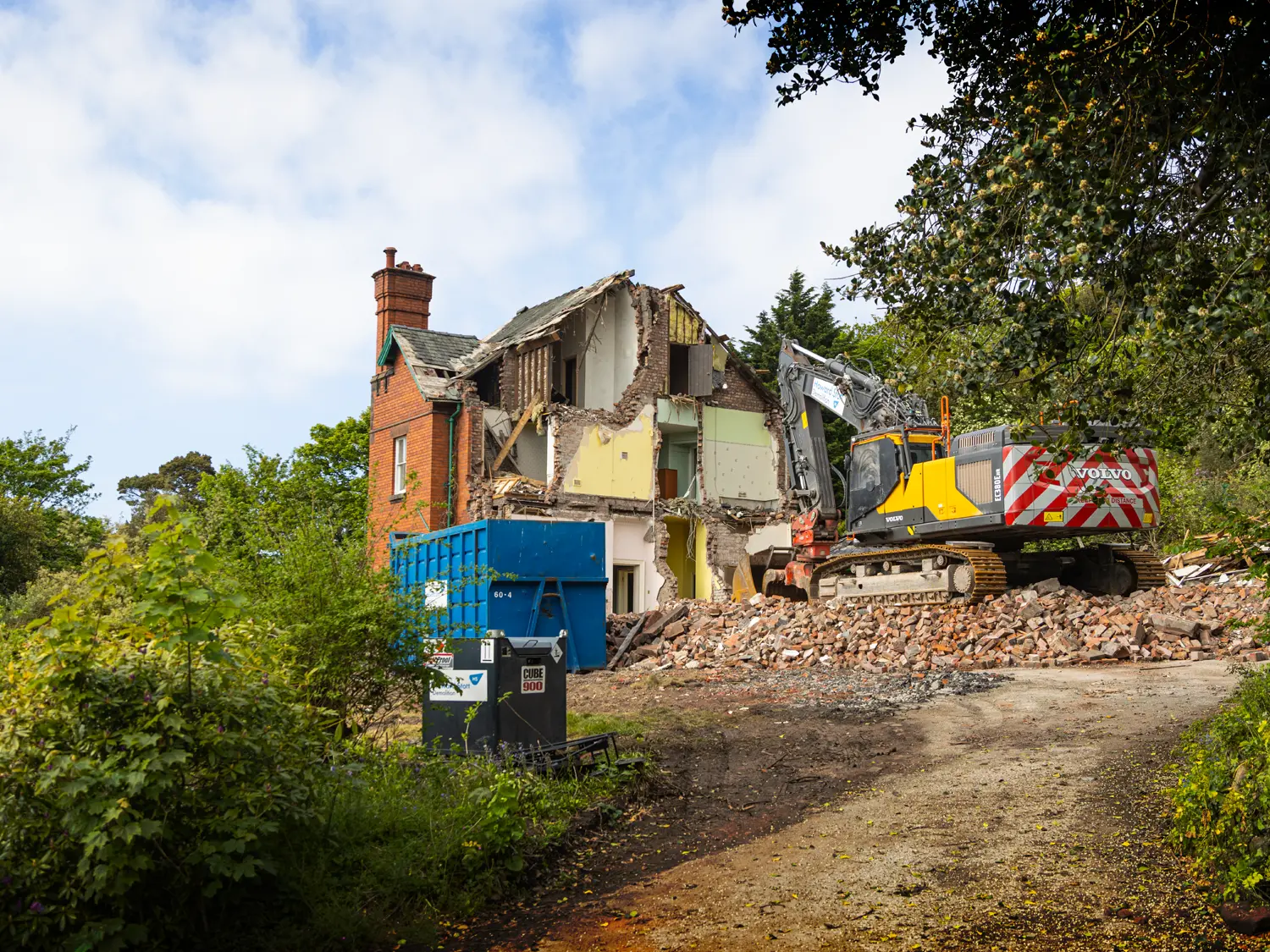
I didn’t go out today to document history.
It just sort of happened.
If you’ve spent any time in West Kirby, you’ll know The Grange. Or at least, you’ll recognise it when someone mentions it. One of those buildings that quietly sits in the background of everyday life. Red brick, a bit of character, nothing shouting for attention but always there.
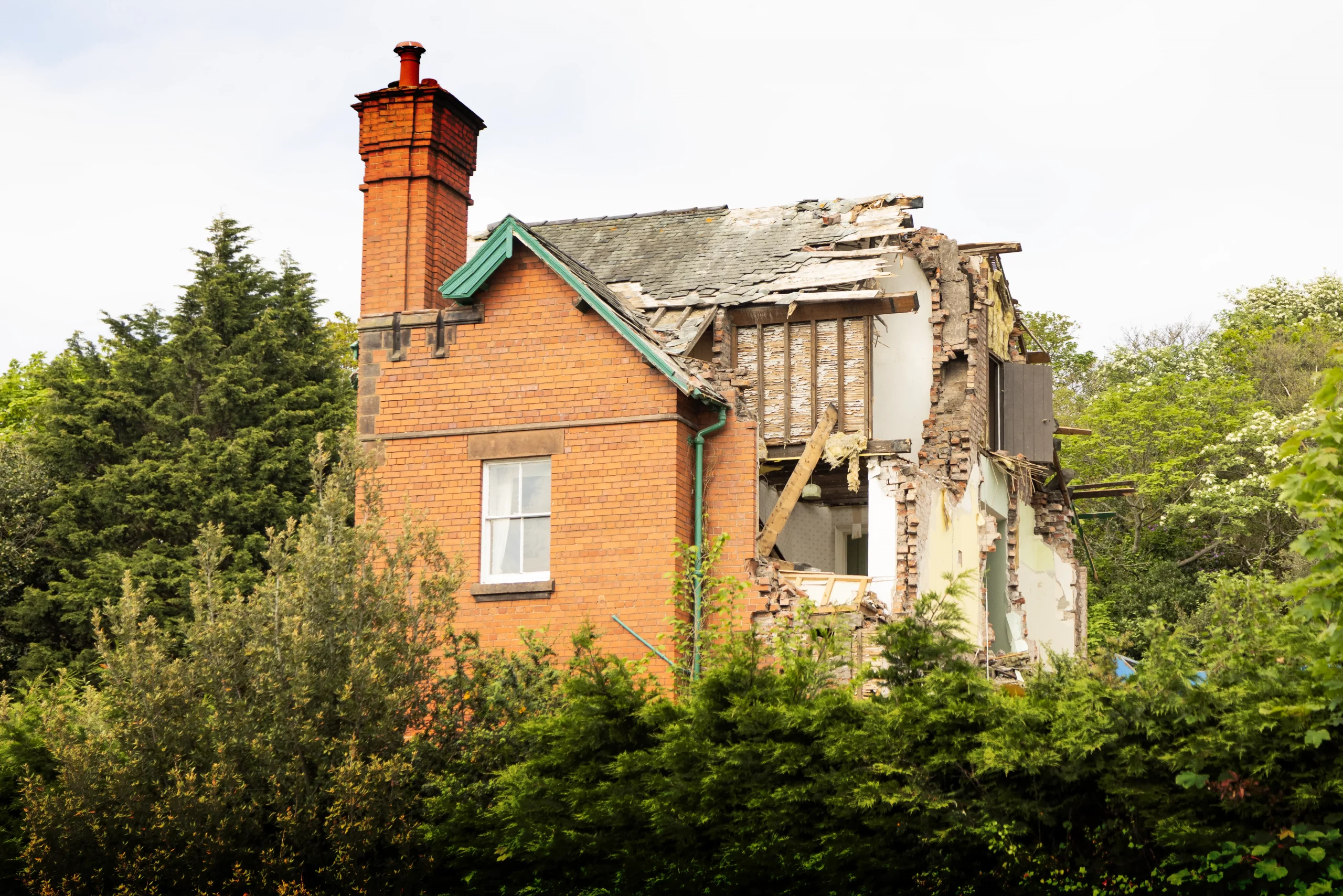
Today, it isn’t really there anymore.
Or at least, it’s in that strange in between state. Fences up. Access restricted. Parts of it already gone, parts of it waiting their turn. You get that sense that if you leave it a week or two, it’ll be unrecognisable.
Right next to it, there’s a board showing what comes next.
A polished image of the future. Clean lines, warm lighting, carefully placed people on balconies living their best lives. It’s branded as The Grange West Kirby, an “exclusive development” of two and three bedroom apartments.
You can see who’s involved straight away.
The build is being delivered by Barnfield Construction
(https://www.barnfieldconstruction.co.uk)
Sales are being handled by Jones & Chapman
(https://www.jonesandchapman.co.uk)
Alongside Clive Watkin
(https://www.clivewatkin.co.uk)
All familiar names if you’ve worked anywhere near property in the North West.
And to be clear, this isn’t a criticism of any of that. This is what happens. Buildings reach a point where they’re no longer viable, land gets repurposed, and something new replaces it. That’s how places evolve.
But standing there today, camera in hand, it felt like watching two timelines overlap.
On one side, a building that had clearly been part of the area for years, quietly ageing out of relevance.
On the other, a version of the future that hasn’t happened yet, already fully formed in marketing material.
And right in the middle, a very small window where both exist at the same time.
That’s the bit most people miss.
It’s also the bit that ends up mattering later.
Because in a few years, when the new apartments are finished and lived in, they’ll just become part of West Kirby. People will walk past them without a second thought, exactly the same way they did with the original building.
And then, every now and again, someone will say:
“Wasn’t there something else there before?”
They’ll half remember it. The colour, maybe. The shape. But the detail will be gone.
That’s the strange thing about places. You don’t realise you’ve lost them until you try to picture them properly and can’t.
Photography fills that gap.
Not in a dramatic way, just quietly. It holds onto the version of things that existed before everything got replaced, rebranded, or redesigned.
The irony is, these are rarely the images anyone asks for at the time.
Developers quite rightly want the finished product. Estate agents want the listings. Construction companies want the completed project shots that show everything at its best.
Very few people think to capture what came before.
Or even the awkward middle stage where nothing looks particularly good, but everything is changing.
That’s actually where the story is.
Because a project like The Grange West Kirby isn’t just about what’s being built. It’s about what it’s replacing, what it’s changing, and how that shift looks in real terms, not just in CGI.
There’s also another layer to it.
For companies like Barnfield Construction, or agents like Jones & Chapman and Clive Watkin, these transitions are part of a much bigger body of work. Over time, they shape entire areas.
Being able to show that properly not just the polished end result, but the full journey adds weight to what they do. It turns a single development into a track record.
Before. During. After.
Most of what you see publicly is the “after”.
But years down the line, the “before” becomes the most interesting part.
Today wasn’t commissioned. No brief, no shot list, no expectation.
Just a building on its way out, and a moment that won’t exist for much longer.
One day, when people search for The Grange West Kirby, they’ll find the new version.
This is what was there just before it disappeared.
Related Blog Posts
Discover what others like you are reading and unlock a world of inspiration. Click now to explore our hand-picked blog posts and increase your occupancy rate.


Leave A Comment